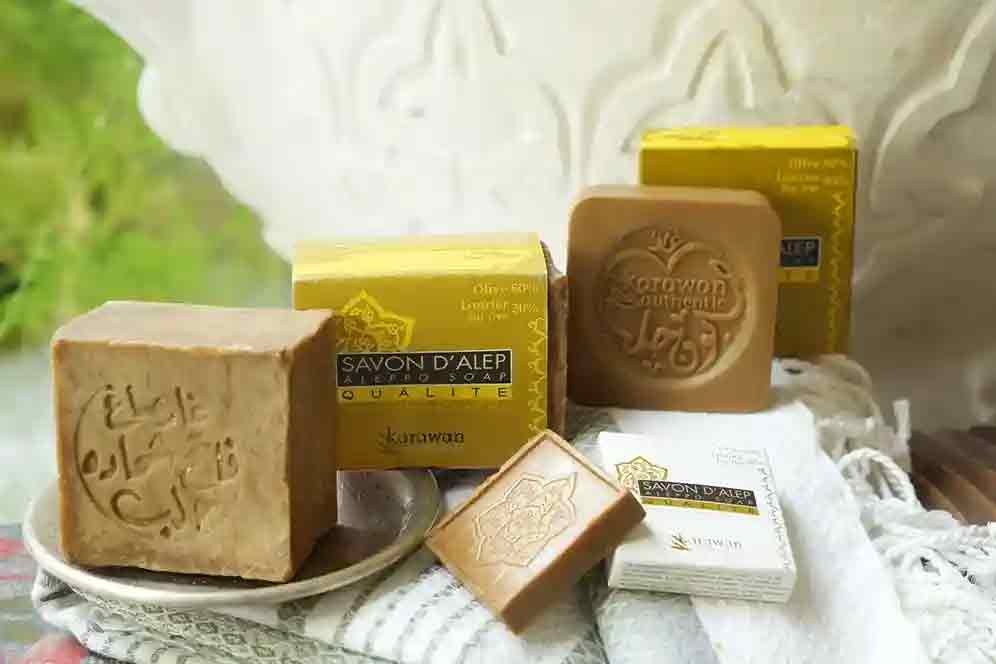
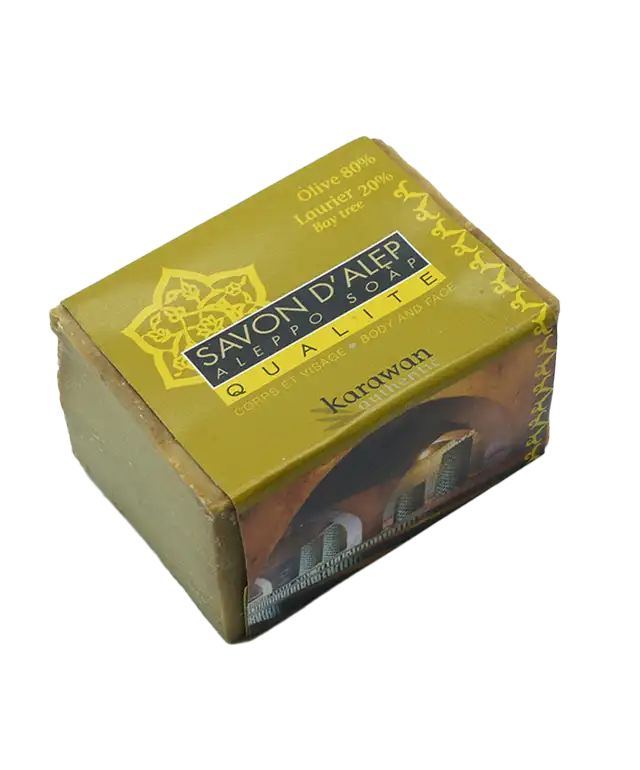
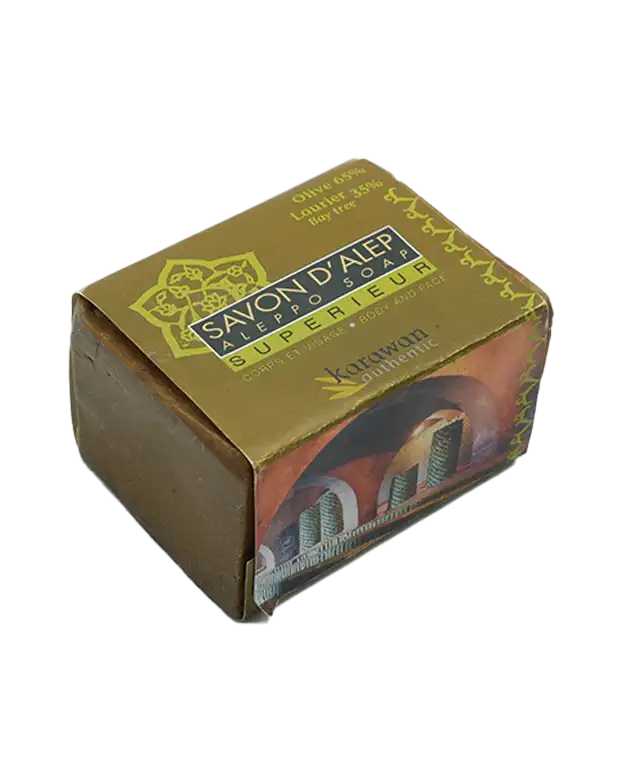
Aleppo soap, the authentic ancestor of Marseille soap.
Produced for over 3,000 years, Aleppo soap is characterised by its traditional method of saponification of oils in a cauldron, as well as its noble ingredients of olive oil and laurel.
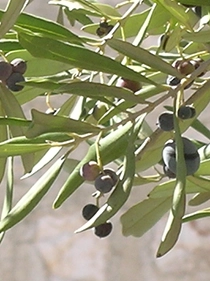
The oldest soap in the world originated in this geographical area because it was the cradle of an ancestral olive tree culture that spread throughout the eastern Mediterranean basin. Olive oil, with its many virtues and uses, contributed greatly to its wealth.
What is the difference between Aleppo soap and Marseille soap?
The Crusaders, setting off for the East to reconquer Jerusalem in the 11th century, discovered this process. On their return, the manufacture of the same soap developed in the Marseille region, which also developed olive tree cultivation. Then, with colonisation, merchants from Marseille imported palm oil, which partially replaced the more expensive olive oil.
Today, the difference between genuine Marseille soap and Aleppo soap is the olive oil content and the presence of laurel berry oil. Karawan Extra Olive Aleppo soap is palm oil-free and contains the maximum amount of olive oil, i.e. 95%. Laurel oil makes up the rest. Traditional Karawan Aleppo soap contains the following four ingredients:
- Olive oil, which cleanses and nourishes the skin without drying it out
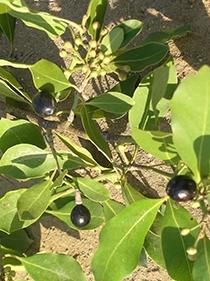
- Laurel berry oil (Laurus Nobilis), sought after for its purifying properties
- Vegetable soda or sea salt, which enables saponification, i.e. the transformation of oils into soap.
- Water for cooking in a cauldron.
No chemical additives or colourings are added. This makes Aleppo soap hypoallergenic, gentle on even the most sensitive skin and kind to the environment.
Discover the expertise of master soap makers
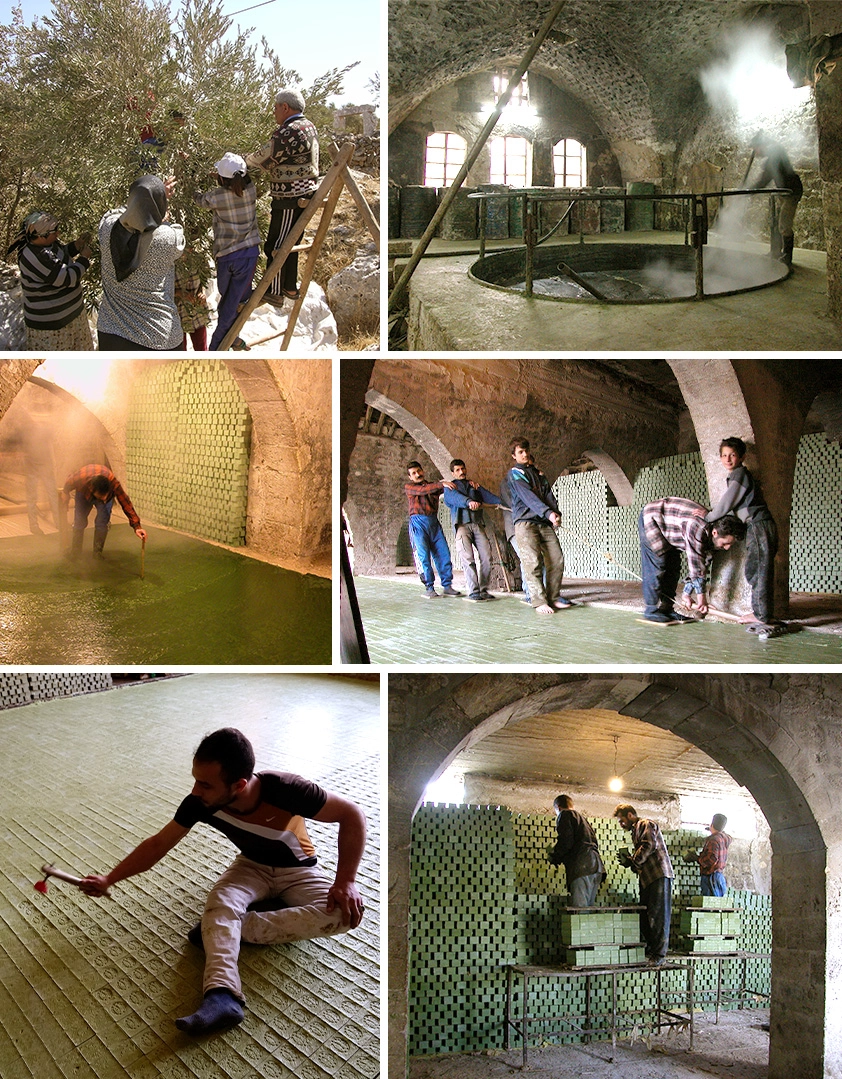
In November and December, after the harvest, the olives are pressed. The oil obtained is mixed with soda and water in large cauldrons. The mixture is heated slowly for around 48 hours until the master soap maker assesses that the saponification process is complete. He then adds laurel berry oil to enrich the Aleppo soap with its purifying properties.
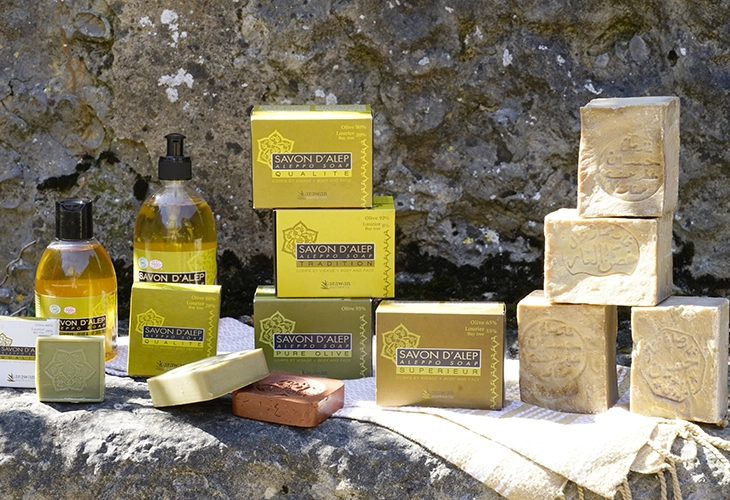
He therefore custom-makes cauldrons for Karawan with different proportions of olive oil and laurel oil to create our range of traditional Aleppo soaps: Extra Olive Aleppo soap 4%, Traditional Aleppo soap 8%, Quality Aleppo soap 20% and Superior Aleppo soap 35%. This long-standing partnership guarantees the traceability and purity of our Aleppo soap.
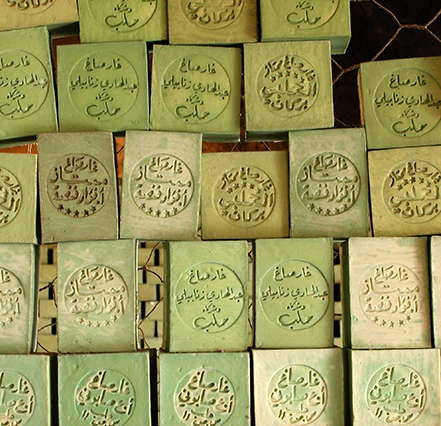
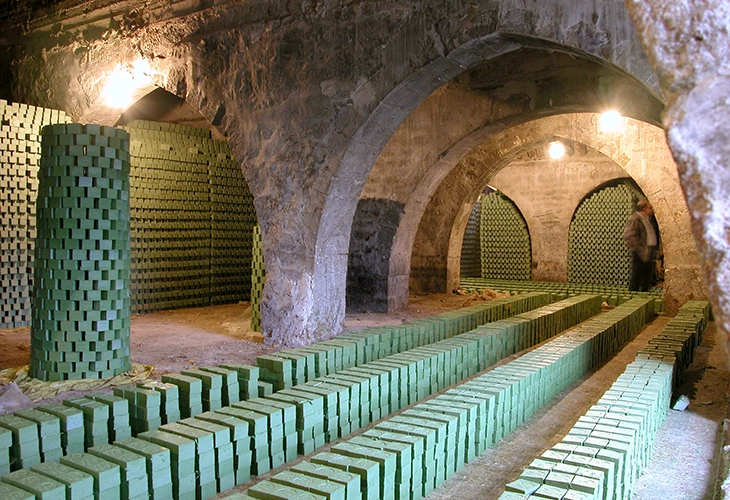
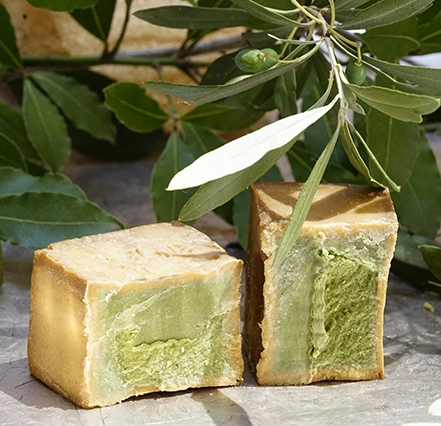
When the dough, washed thoroughly with water, has a uniform appearance and is fully cooked, it is poured onto the floor in a large sheet. The cold, dry winter climate in Aleppo allows it to set within 24 hours. Once solidified, the green-coloured paste is cut by hand into 200-gram blocks. Each bar of soap is then stamped by hand with the soap maker's seal. Next comes the ‘soap harvest’. The blocks are collected, assembled in a staggered pattern and stacked in towers for good ventilation, where they are left to dry for nine months. Over time, the original green colour of the paste turns brown around the edges of the soap. The centre remains the velvety green characteristic of the noble oils in Aleppo soap.
Which Aleppo soap should you choose?
To choose a high-quality Aleppo soap, it must contain only noble oils, i.e. olive oil and laurel oil. For 20 years, the Karawan range of Aleppo soaps has guaranteed the excellence of its recipes, with different ratios of the two oils to meet everyone's needs.
The laurel oil added to the olive oil is extracted from the small berries of the laurel tree (Laurus Nobilis) by cold pressing. Its price can be up to 10 times that of olive oil. Its cosmetic properties contribute to making Aleppo soap a truly natural skincare soap, suitable for everyday use on problem skin or for the most delicate skin types.
You can now understand the price differences between Aleppo soaps, which vary according to the amount of laurel oil used. It is unlikely that you will find an Aleppo soap with a high laurel content (20% or 35%) at the same price as another soap with a low laurel content.
An Aleppo soap with a high laurel oil content is particularly sought after as a natural purifying soap for oily skin and acne problems. Gentle on the skin's hydrolipidic film and flora, it is ideal for intimate hygiene. It can also be used as a shaving soap to soften and purify the skin in one step. Discover our Superior Aleppo soap 35%.
You can choose Aleppo Extra Olive soap with 4% laurel, or Aleppo Tradition soap with 8% laurel, if your skin does not require intense purifying care. For dry or combination skin, you will benefit from a soap rich in nourishing olive oil and the natural fragrance of laurel berries, with green and invigorating scents. Your skin will be nourished with essential fatty acids and vitamin E naturally contained in olive oil, recognised for thousands of years as a beauty secret.
Finally, Aleppo soap, like Marseille soap, is highly effective for laundry. Whether used for pre-washing or hand washing, few stains can resist it!
Try Karawan Aleppo laundry soap, available in 200 g blocks or flakes.
A sustainable and supportive partnership with Aleppo soap producers.
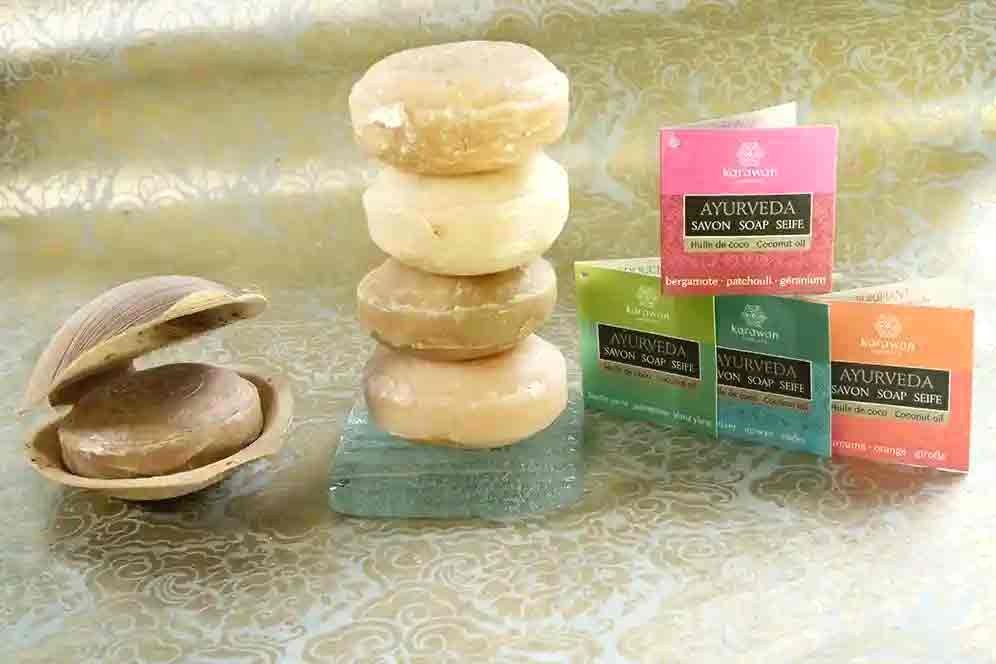
For more than 20 years, Karawan has established a loyal partnership with soap makers in Aleppo. The war in Syria has led them to secure their production in Turkey, 70 km from the border. We continue to develop our products with the same family. This strong relationship has enabled us to innovate together, combining the expertise of Grasse perfumers with that of Aleppo soap makers. This has led to the creation of our range of scented Aleppo soaps, based on Aleppo soap made with olive oil.
The soap blocks are reduced to shavings and then softened at low temperature to be mixed with natural essential oil-based compositions to preserve their scent.
The moulds and patterns are our exclusive creations, inspired by the graphic arts of various Eastern cultures: Turkish, Persian, Arabic and Indian. Try our boxes of scented Aleppo soaps: Jenjis, Asmaa, Iskendar.
You will discover a magnificent, refined gift for a wellness journey along the Silk Roads.